
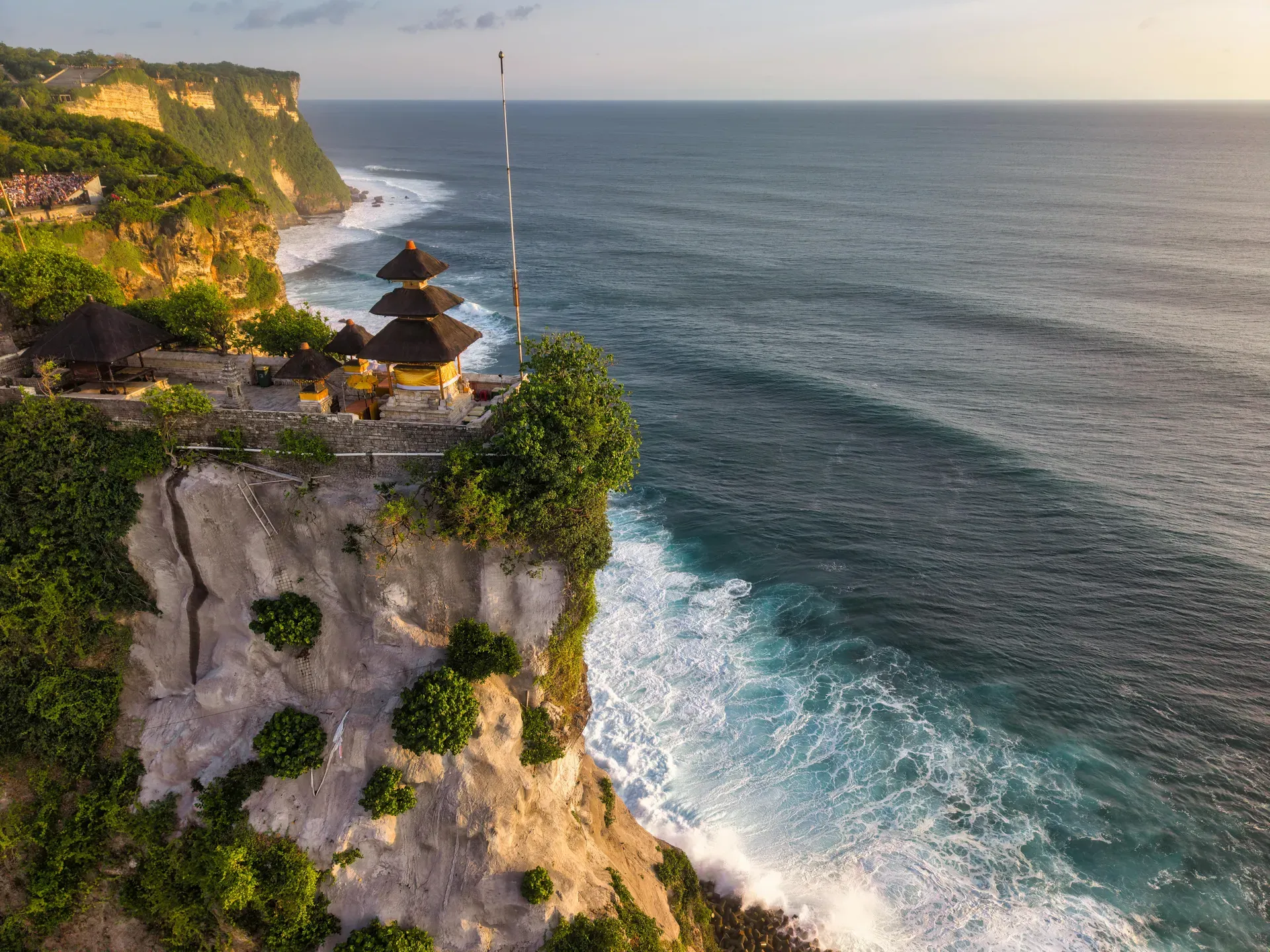
This 11th-century Balinese Hindu sea temple sits precariously on a 70-meter limestone cliff. At sunset, visitors gather in the 1,200-seat open-air amphitheater to watch 50 to 100 men perform the hypnotic Kecak Fire Dance.
Find Guided ToursUluwatu Temple, known locally as Pura Luhur Uluwatu, is a Balinese Hindu sea temple located at the southernmost point of Bali in Pecatu village. The structure sits on the edge of a rugged limestone cliff that drops 70 meters directly into the Indian Ocean. This high elevation provides panoramic views of the water and makes it a prominent landmark on the southwestern tip of the Bukit Peninsula. A small surrounding forest serves as the habitat for approximately 650 long-tailed macaques, which are regarded as the temple's spiritual guardians.
The site holds major religious importance for the island. It functions as one of Bali's six spiritual pillars, or Sad Kahyangan. Additionally, it is recognized as one of the nine directional temples, or Pura Kahyangan Jagat, established to protect Bali from evil sea spirits. Beyond its religious function, the temple draws up to 1.2 million visitors annually. Most arrive to watch the sun set over the ocean and attend the nightly Kecak Fire Dance. This 60-minute performance takes place in a 1,200-seat open-air amphitheater, where a chorus of 50 to 100 men chant while retelling the Ramayana epic.
Archaeological evidence indicates that a structure has existed at this cliffside location since at least the 10th century. The temple complex underwent significant expansion during the 11th century under the direction of the Javanese sage Empu Kuturan. He helped establish the traditional Balinese temple design seen today, including the split gateways, known as Candi Bentar, and the three-tiered Meru towers.
In the 16th century, another influential priest named Dang Hyang Nirartha contributed further to the site by adding the padmasana shrines. According to local historical accounts, Nirartha attained moksha, or spiritual liberation, at this exact location. Today, the inner sanctum remains strictly reserved for Hindu worshippers, preserving the site's centuries-old religious traditions while tourists are permitted to explore the outer courtyards and cliffside pathways.
Discover the full history and cultural significance on our About page.
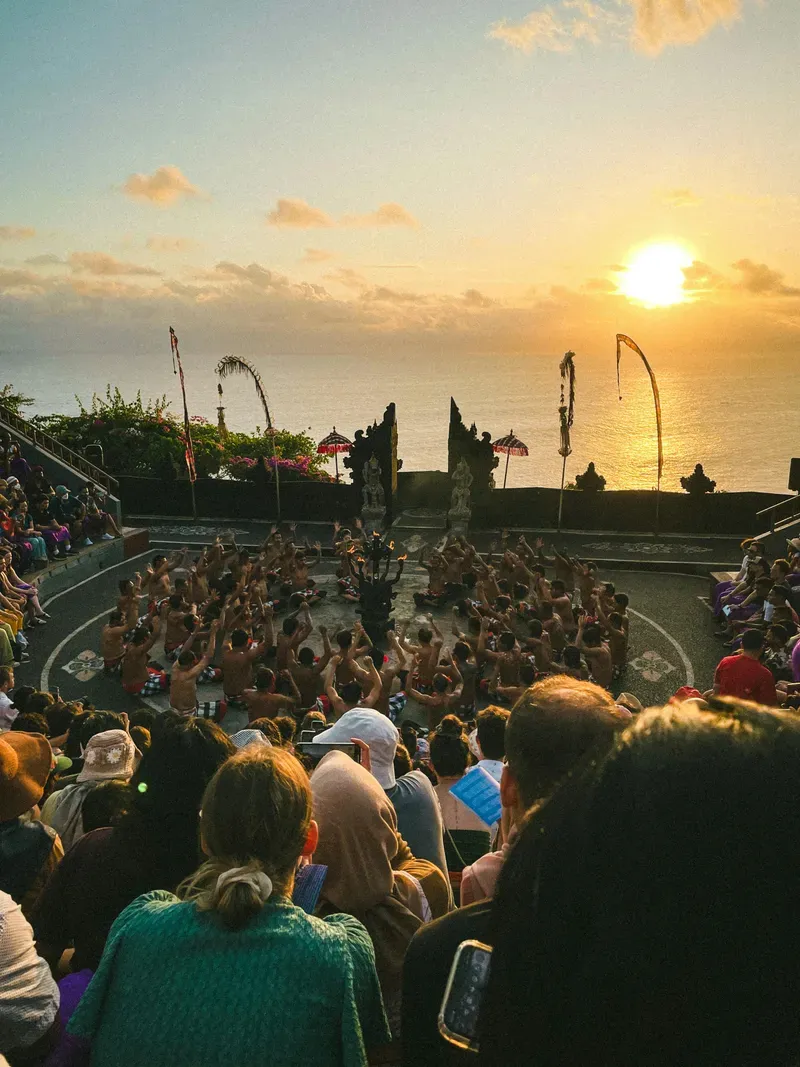
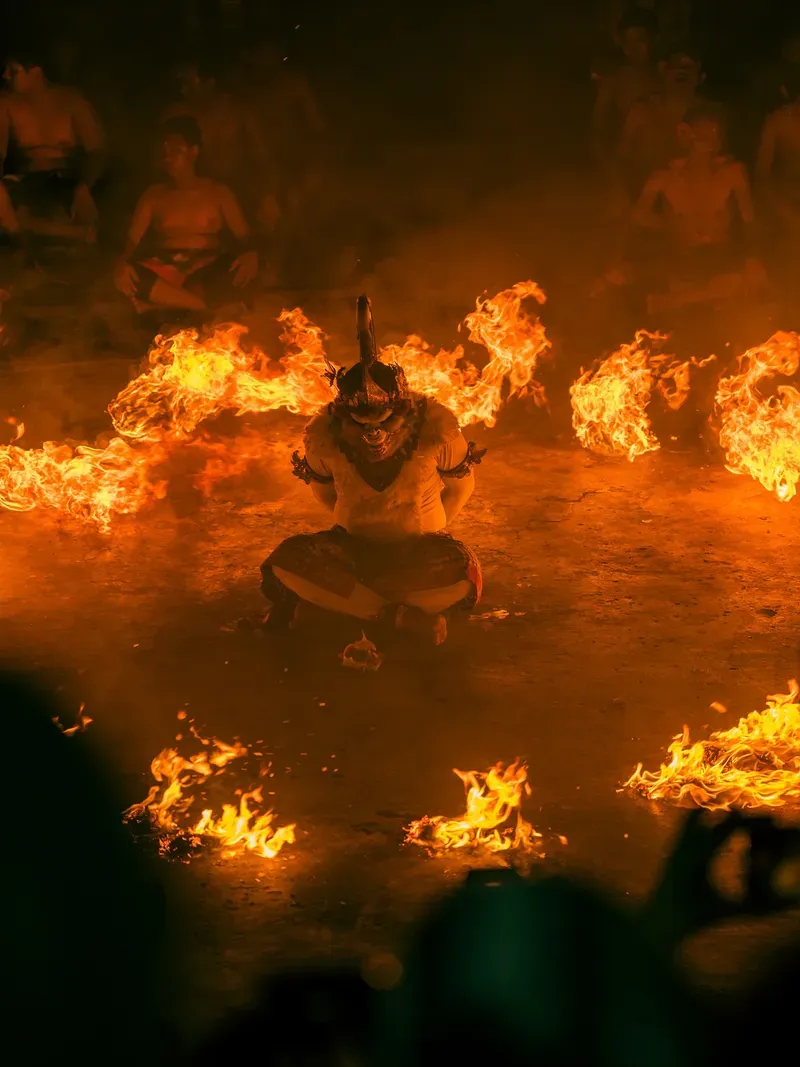
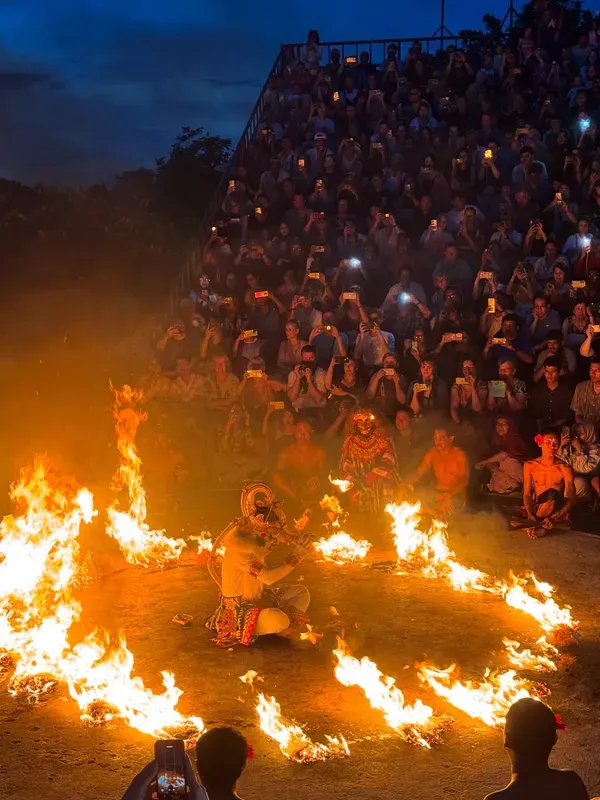
Watch a 60-minute retelling of the Ramayana epic in a 1,200-seat open-air amphitheater. Between 50 and 100 men form a chorus, chanting rhythmically as the sun sets behind them. The performance begins daily at 18:00 and requires a separate 150,000 IDR ticket.
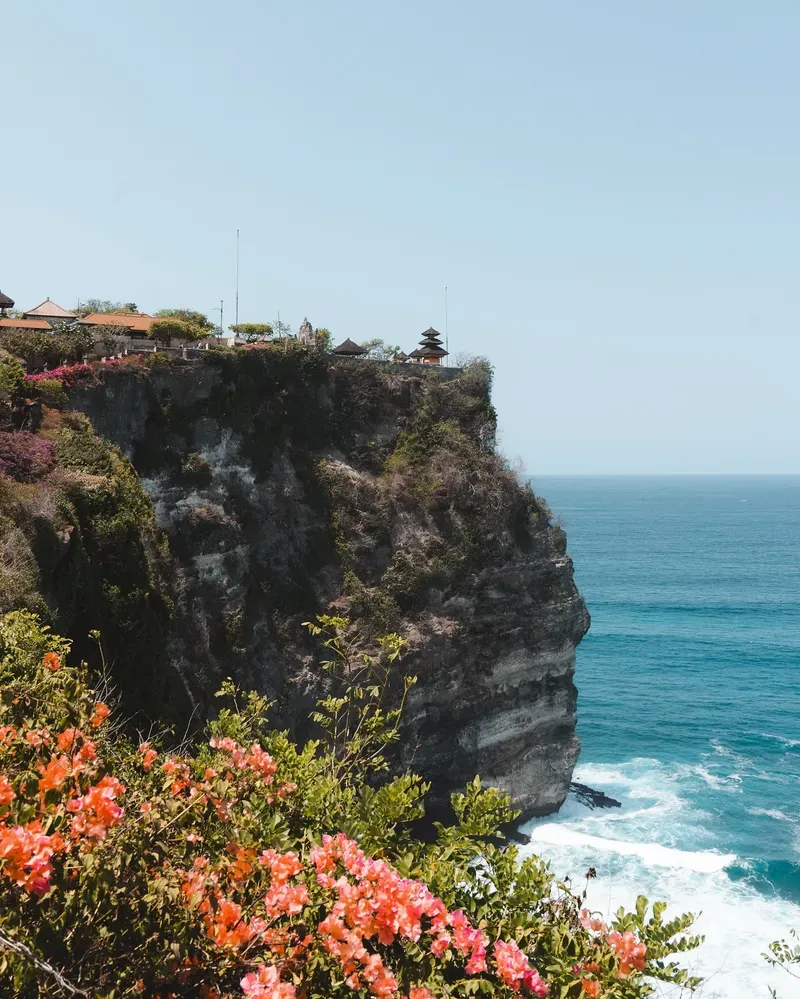
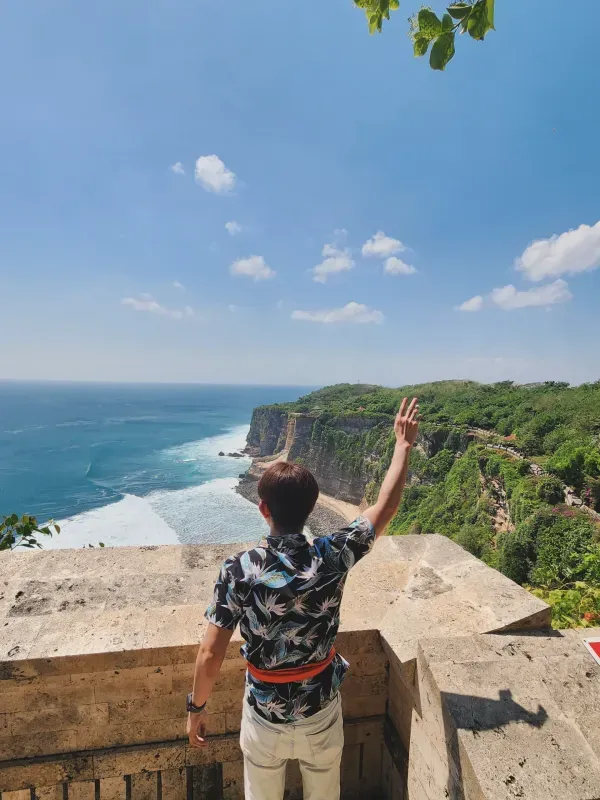
Walk along the paved path tracing the edge of a steep limestone cliff. Positioned 70 meters directly above the Indian Ocean, this vantage point provides sweeping views of the water and the temple silhouette. Arrive between April and October for the clearest skies.
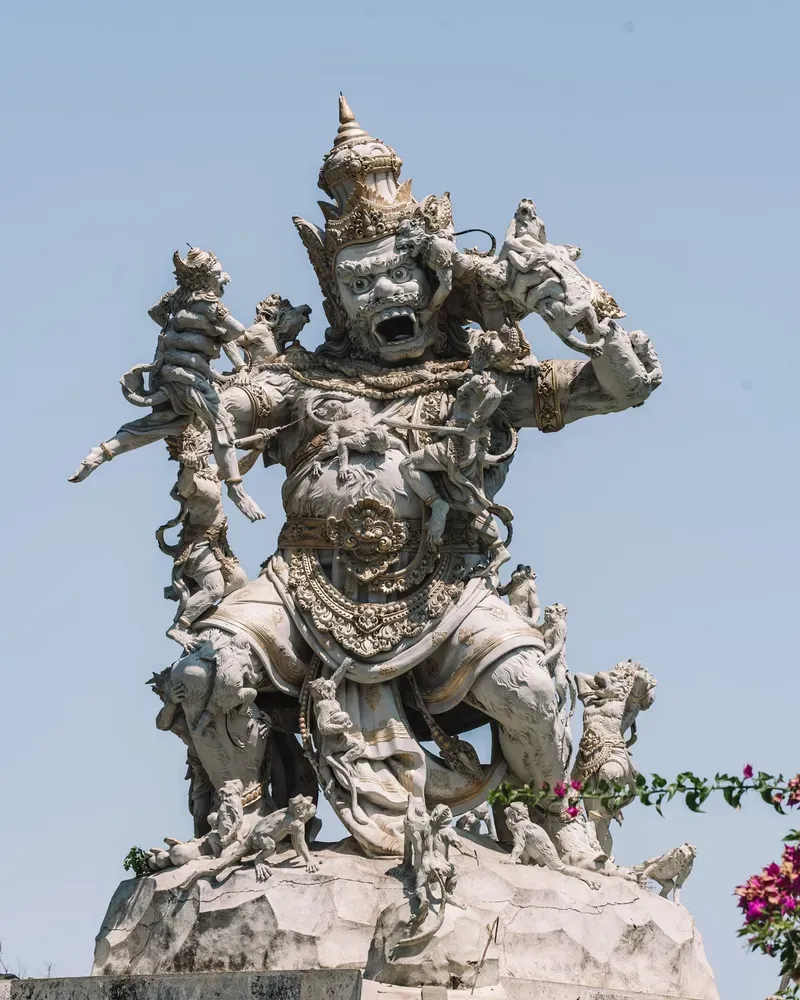
A small forest surrounding the complex houses a population of roughly 650 long-tailed macaques. These spiritual guardians are highly skilled thieves known for a unique bartering behavior. Handlers frequently step in to trade fruit for smartphones and sunglasses snatched from unsuspecting tourists.
Examine traditional Balinese design elements like the split gateways, known as Candi Bentar, and the three-tiered Meru towers. Expanded in the 11th century by the Javanese sage Empu Kuturan, the site serves as one of Bali's nine directional temples protecting the island from sea spirits.
Hand-picked tours with free cancellation and verified reviews
 Free Cancellation 2h
  Free Cancellation
  Free Cancellation
  Free Cancellation 1h
  Free Cancellation 8h
  Free Cancellation 10h
  Free Cancellation
  Free Cancellation
 The ideal time to visit Uluwatu Temple is during the dry season from April to October, ensuring clear skies for the 18:00 sunset and minimal rain disruption for the outdoor Kecak Fire Dance. Arrive by 16:30 to explore the grounds and secure tickets before heavy traffic builds.
March falls into the rainy season, bringing slippery paths and potential dance cancellations. Conditions improve significantly in April and May, initiating the dry season with clearer skies for sunset viewing.
These dry season months provide the most reliable conditions for visiting the temple. Visitors can expect clear skies for the evening sunset and uninterrupted outdoor Kecak dance performances.
September and October continue the favorable dry season weather with excellent sunset visibility. November marks the transition into the rainy season, increasing the risk of wet paths and rescheduled dances.
This period represents the peak of the rainy season at the temple. Heavy rain frequently causes slippery clifftop paths and forces the cancellation or relocation of the outdoor Kecak performance.
Uluwatu Temple is open daily from 07:00 to 19:00.
| Category | Price |
|---|---|
| International Adult | 60,000 IDR |
| International Child (4–12 years) | 40,000 IDR |
| Kecak Fire Dance Performance (Optional) | 150,000 IDR |
| Car Parking | 5,000 IDR |
The Kecak Fire Dance requires a separate ticket from the general temple entrance fee. Because dance tickets frequently sell out by 17:00, visitors should book online in advance or arrive at the ticket booth by 16:30. Bring physical IDR cash, as card and QRIS payment terminals do not always function reliably.
For complete schedules and ticket prices, visit our Hours & Fees page.
Public buses do not service the temple, so visitors must rely on taxis, private drivers, or rental scooters. Be aware that traffic in the area becomes extremely congested after 17:00, and departing after the 18:00 Kecak show can take over two hours.
📍 Pecatu village, South Kuta, Badung Regency, Bali
Ride-hailing apps and local taxis provide the most convenient way to reach the temple. A typical trip from Kuta covers a distance of 22 kilometers. Prices will fluctuate based on current traffic conditions and app demand. Expect severe delays if you leave after the evening performance, as return trips can take over two hours.
Hiring a driver is highly recommended for a full-day tour of South Bali. This allows you to combine your visit with other regional attractions without worrying about return transport. A standard route from Ubud spans 55 kilometers across the island. Keep in mind that a car parking fee of 5,000 IDR applies upon arrival.
Riding a scooter is the fastest method for navigating the heavy traffic around the Bukit Peninsula. The 27-kilometer route from Seminyak provides flexibility to bypass the gridlock that builds up after 17:00. Riders must carry a valid international driving permit to comply with local regulations. This option avoids the long waits associated with booking return taxis.
For detailed transport options and routes, visit our Directions page.
The resident macaques are highly skilled thieves that snatch roughly 5 to 10 smartphones daily. Remove sunglasses, hats, and shiny jewelry before entering the grounds. If a monkey takes an item, do not chase it. Instead, find a temple handler who can retrieve your property by bartering with fruit.
The 1,200-seat amphitheater fills up quickly for the daily 18:00 Kecak Fire Dance. Tickets cost 150,000 IDR and regularly sell out by 17:00. Arrive at the ticket booth by 16:30 or book online in advance. Sit in the middle or upper rows for the best sunset views.
Traffic congestion around the Bukit Peninsula worsens significantly after 17:00. Leaving the site after the main performance concludes is notoriously slow. Expect the 22-kilometer return trip to Kuta or the 27-kilometer drive to Seminyak to take over two hours. Scooters navigate this faster but require an international permit.
Modest clothing covering your shoulders and knees is mandatory. The temple provides a free sarong and sash at the entrance for all visitors. Tourists cannot enter the inner sanctum, which is reserved strictly for Hindu worshippers. Women who are menstruating are requested to avoid the sacred areas entirely.
The official ticket booths do not reliably support credit cards or QRIS payments. Bring enough physical IDR to cover the 60,000 IDR adult entrance fee and the 150,000 IDR dance ticket. If you forget cash, an ATM center operates near the main entrance. Parking costs an additional 5,000 IDR.
The temple complex sits 70 meters above the Indian Ocean. Many sections of the clifftop walkway have very low or completely absent railings. Keep children under constant supervision while navigating the site. Afternoon visits present a high risk of heat exhaustion, as the paved paths offer minimal shade.
This famous surfing spot requires visitors to pass through a unique cave entrance to reach the sand. It gained international recognition after being featured in the film 'Eat Pray Love'.
This dedicated cultural park features massive architectural achievements. It is home to one of the tallest statues in the world, which stands exactly 122 meters high.
This coastal area is highly regarded for its beachfront seafood dining. The bay features notably calm waters, making it an ideal location for a relaxed evening meal.
Read what travelers share about their experience visiting Uluwatu Temple — from practical tips to personal highlights.
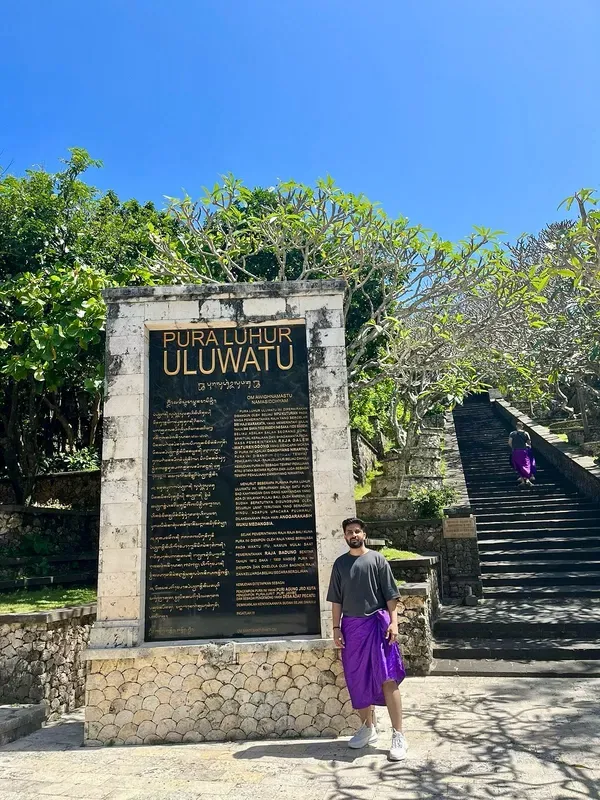
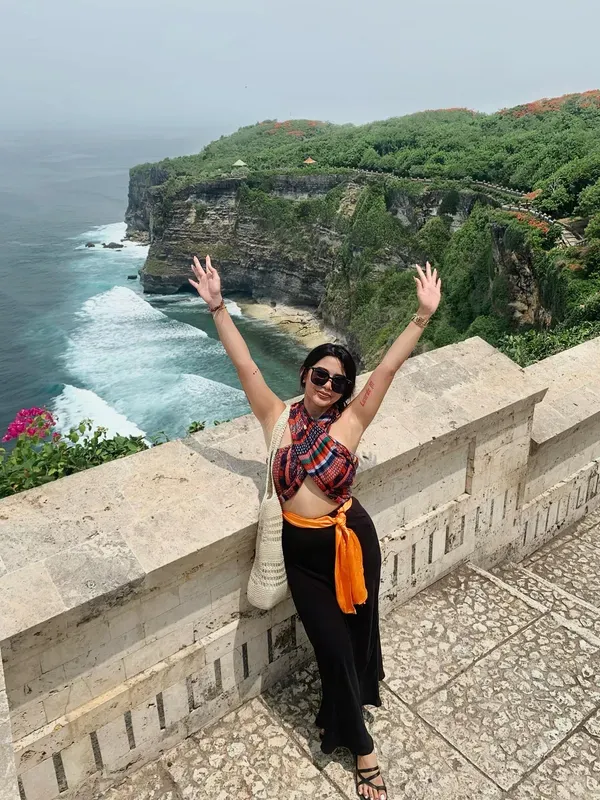
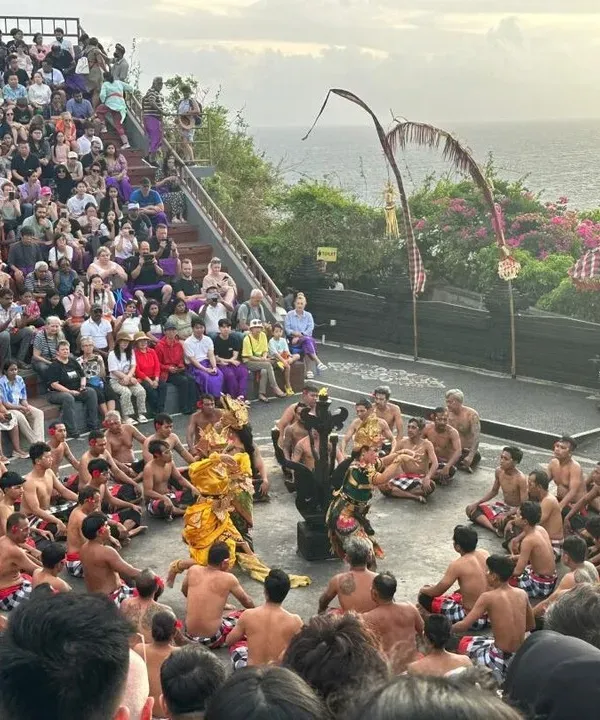
The temple entrance fee is 60,000 IDR for international adults and 40,000 IDR for children aged 4 to 12. If you want to watch the Kecak Fire Dance, you must buy a separate ticket for 150,000 IDR per person. Bring cash in IDR, as the ticket booths do not always guarantee card or QRIS functionality.
Yes, you should book online or arrive at the ticket booth by 16:30. Tickets for the 1,200-seat amphitheater frequently sell out by 17:00. The main performance starts daily at 18:00, with a second show sometimes added at 19:00 during peak season.
Modest dress is mandatory, meaning your shoulders and knees must be covered to enter the grounds. The temple provides a free sarong and sash at the entrance if you are not appropriately dressed. You must also wear this attire to watch the dance, as the theater is located within the temple complex.
There are no public buses that travel to the temple. Visitors must rely on taxis, ride-hailing apps like Grab or Gojek, private drivers, or rental scooters. A taxi from Kuta covers 22 kilometers and typically costs between 200,000 IDR and 250,000 IDR.
The site is partially accessible, featuring concrete ramps in the main yard and along the clifftop paths. However, reaching the inner temple and certain viewpoints requires navigating steep stone stairs. Elderly visitors who can handle moderate walking will find the ramps helpful, but they should prepare for intense afternoon heat and uneven terrain.
The resident population of about 650 long-tailed macaques is generally not aggressive, but they are highly skilled thieves. They snatch roughly 5 to 10 smartphones per day, along with sunglasses, hats, and prescription glasses. Before entering, remove all loose or shiny items to avoid having them held for ransom by the monkeys.
The average visit duration is 1.5 to 3 hours. Arriving by 16:30 allows enough time to walk the 70-meter high clifftop paths before the 18:00 dance performance. Be aware that traffic leaving the area after the show is notoriously slow and can take over two hours to reach Kuta or Seminyak.
No, tourists are restricted to the outer courtyards and clifftop walkways. The inner sanctum is reserved exclusively for Hindu worshippers. Additionally, Balinese Hindu custom requests that women who are menstruating do not enter the sacred areas of the temple complex.
Browse verified tours with free cancellation and instant confirmation.
Find Tours