
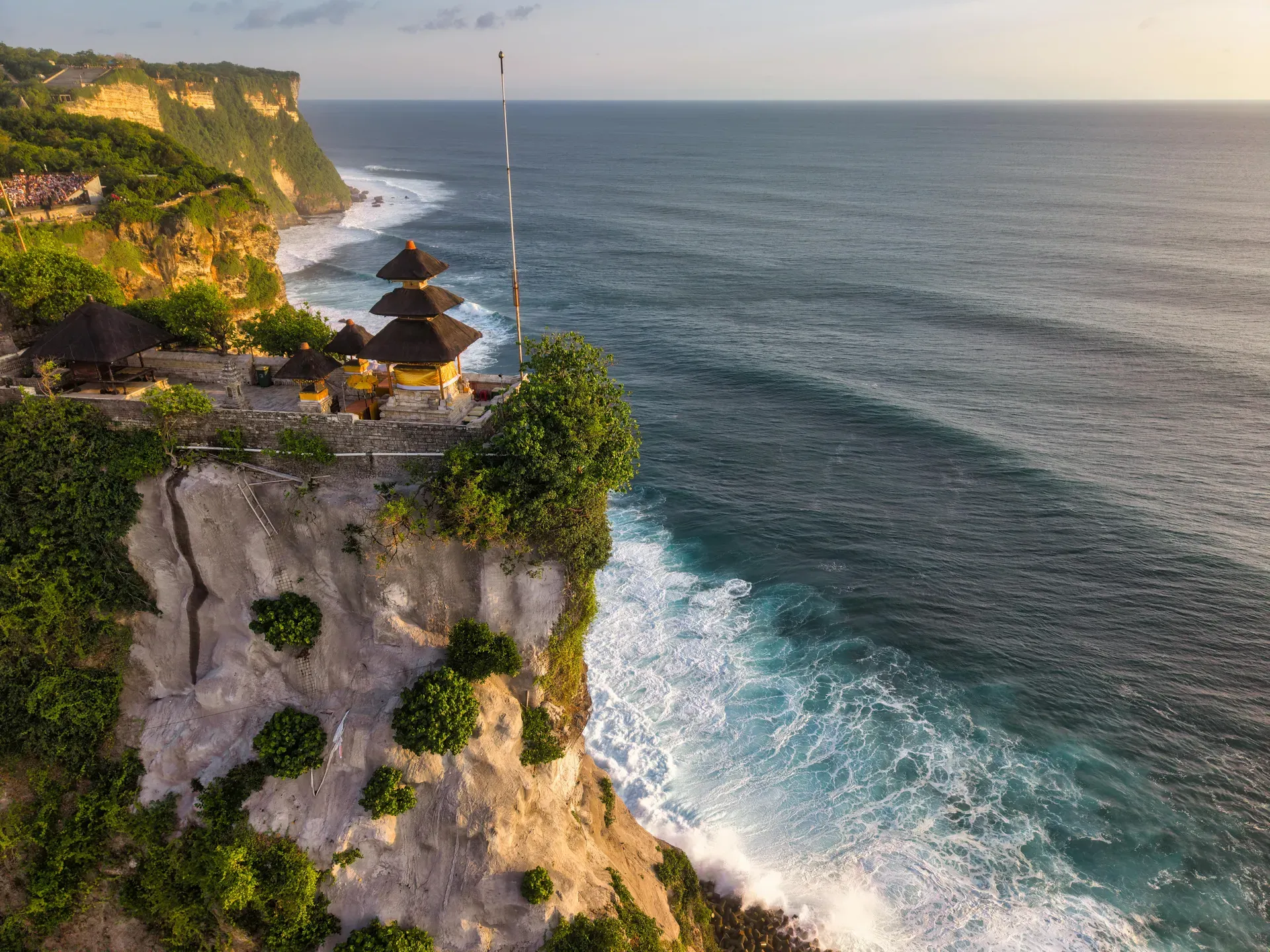
Experience the iconic sunset views over the Indian Ocean from the cliffs of Uluwatu Temple. These guided tours often include tickets to the traditional Kecak Fire Dance and convenient round-trip transportation.
 Free Cancellation
 Spend 8 hours beach-hopping through Nusa Dua and Padang Padang before watching the sunset at Uluwatu Temple.
 Free Cancellation
 See Uluwatu Temple’s clifftop sunset and a traditional Kecak fire dance with private transport and tickets included.
 Free Cancellation
 Visit the cliffside Uluwatu Temple and watch a traditional Kecak Fire Dance performance at sunset.
 Free Cancellation
 Admission Tickets for Kecak Dance & Uluwatu Temple Sunset
 Free Cancellation
 Experience a sunset at Uluwatu Temple, a traditional Kecak fire dance, and a candlelit seafood dinner at Jimbaran.
 Free Cancellation
 Watch the sunset from the cliffside Uluwatu Temple in Pecatu on this intimate small-group tour.
 Free Cancellation
 Explore Bali’s southern cliffs, from the sands of Padang-padang to a traditional Kecak fire dance at Uluwatu Temple.
 Free Cancellation
 Watch the sunset and a kecak dance at Uluwatu Temple, with the option of a seafood dinner at Jimbaran Bay.
Read what travelers share about their experience visiting Uluwatu Temple — from practical tips to personal highlights.
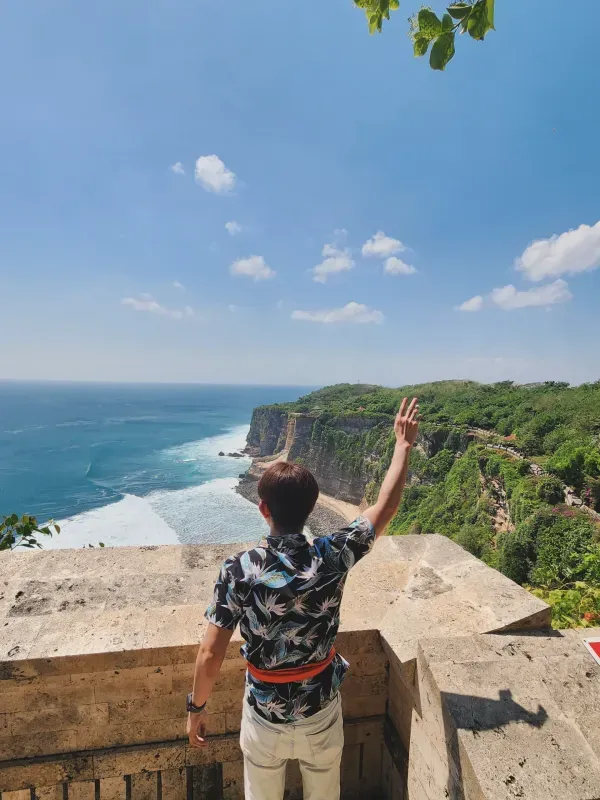
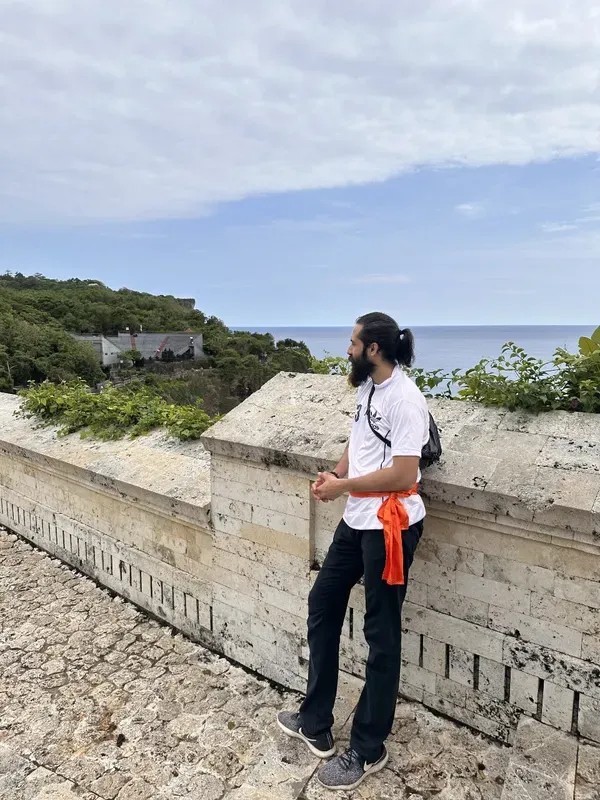
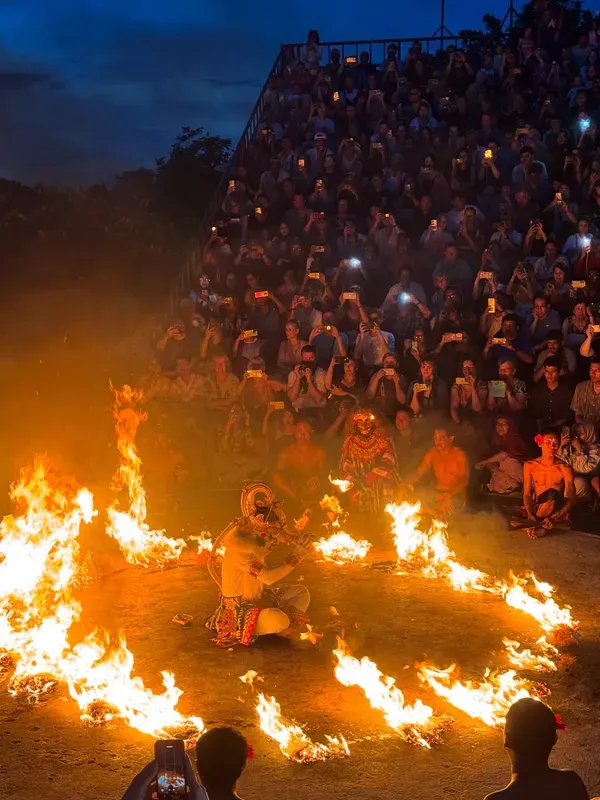
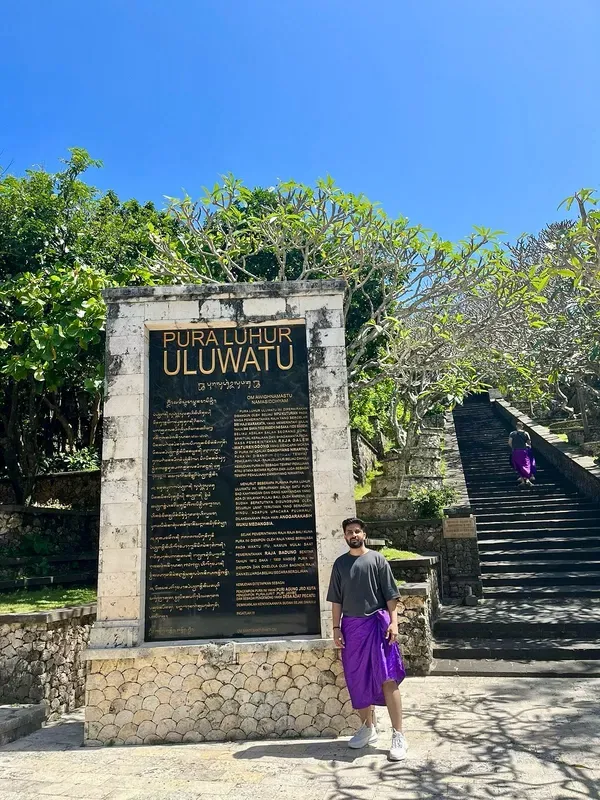
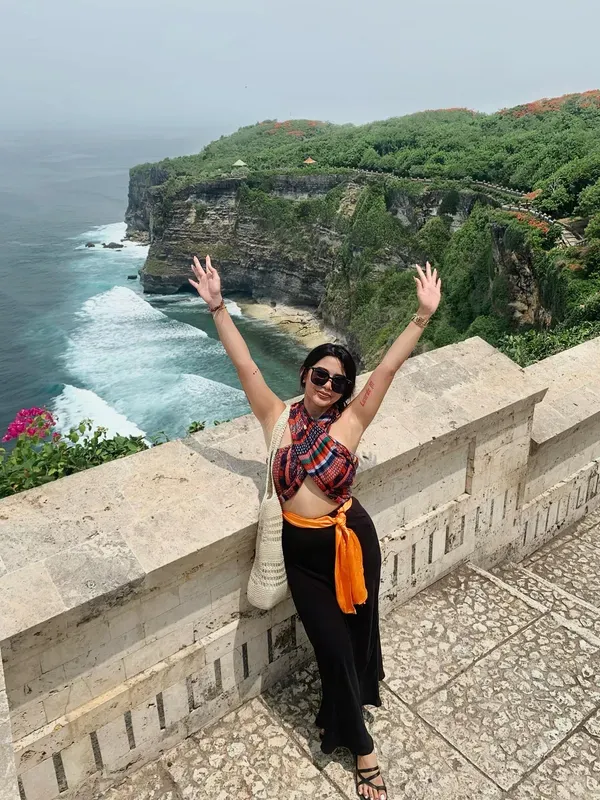
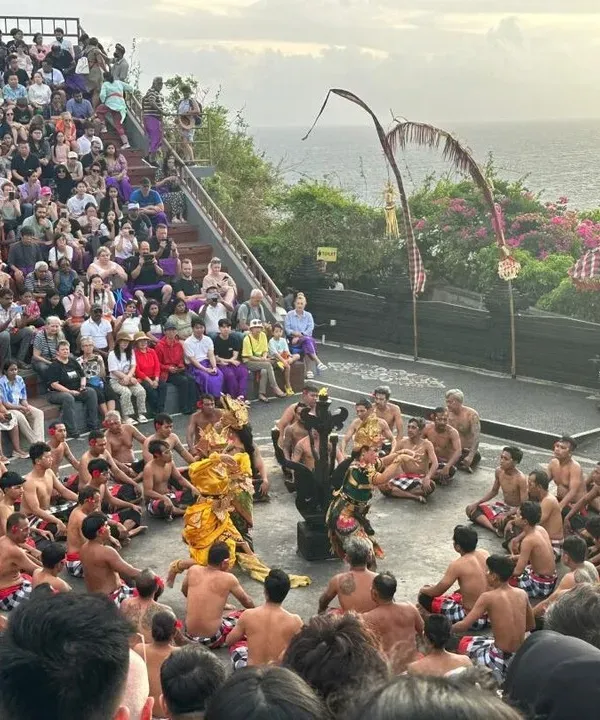
Visiting Uluwatu Temple at sunset is one of Bali's most iconic experiences. Perched 70 meters above the Indian Ocean, this 11th-century sea temple offers dramatic cliffside views, encounters with resident macaques, and the unforgettable Kecak Fire Dance as the sun dips below the horizon.
Walk along the paved pathways hugging the edge of a steep 70-meter limestone cliff. The vantage point offers unobstructed, panoramic views of the Indian Ocean crashing below.
Watch a hypnotic 60-minute performance in an open-air amphitheater. A chorus of 50 to 100 men chant rhythmically while retelling the Ramayana epic against a stunning sunset backdrop.
Observe the temple's ~650 resident long-tailed macaques. Considered spiritual guardians of the site, these monkeys are fascinating to watch but are also notorious for their cheeky bartering behavior.
Marvel at traditional Balinese temple design dating back to the 11th century. You'll see the classic split gateways (Candi Bentar) and three-tiered Meru towers.
Many full-day tours include stops at nearby southern coast beaches. You can swim at the calm Geger Beach or check out the famous surf break at Padang Padang before heading to the temple.
A popular way to end an Uluwatu tour is a short drive to Jimbaran Bay. Here, you can enjoy a fresh Balinese seafood dinner right on the beach under the stars.
Planning your Uluwatu sunset tour requires a bit of preparation to ensure you get the best experience and don't miss out on the highly sought-after dance tickets.
Most options are private tours that include hotel pickup and drop-off in an air-conditioned vehicle. You can choose a quick 5-hour evening trip or an 8-hour full-day itinerary that includes beach hopping.
Pay close attention to what your tour covers. The temple entrance fee is 60,000 IDR, and the Kecak dance requires a separate 150,000 IDR ticket. Some tours are all-inclusive, while others only cover transportation.
The 18:00 Kecak Fire Dance is incredibly popular and tickets often sell out by 17:00. Booking an all-inclusive tour means your guide will secure these tickets for you in advance, saving you from missing the show.
Modest dress is mandatory for entering the temple grounds, which includes the amphitheater. Shoulders and knees must be covered. If you aren't dressed appropriately, free sarongs and sashes are provided at the entrance.
The macaques here are highly skilled thieves that snatch 5-10 smartphones a day. Leave loose items like sunglasses, hats, and shiny jewelry in your tour vehicle before walking the grounds.
Traffic leaving the Bukit Peninsula after the 18:00 show is notoriously heavy. It can take over 2 hours to get back to Kuta or Seminyak, which is why having a comfortable private car with a driver is highly recommended.
The site is partially wheelchair accessible with concrete ramps in the main yard and clifftop paths. However, the inner temple and certain viewpoints require navigating steep stone stairs.
Most tour operators offer flexibility for changing plans. You can typically get a full refund if you cancel your booking at least 24 hours before the scheduled departure time.
| Uluwatu & Kecak Only | Beaches & Temple Full-Day | Temple, Dance & Dinner | Temple & Spa Combo | |
|---|---|---|---|---|
| Duration | 5 to 6 hours | 8 hours | 6 hours | 6 hours |
| Best for | Quick evening trips, sunset focused | Beach lovers, full-day explorers | Couples, foodies | Relaxation, honeymooners |
| Includes | Private transport, guide, water | Transport, beach stops, temple visit | Transport, tickets, Jimbaran seafood dinner | Transport, tickets, 2-hour Balinese massage |
| Price from | $23 | $28 | $35 | $57 |
Uluwatu Temple is open daily to visitors from 07:00 to 19:00.
If you are visiting for the sunset and the Kecak Fire Dance, the main performance begins at 18:00 daily. During the peak tourist season, a second show is often added at 19:00 to accommodate the crowds.
It is highly recommended to arrive at the temple by 16:30. This gives you enough time to explore the clifftop walkways, take photos, and secure a good seat in the amphitheater before it fills up.
Uluwatu Temple is located on the southwestern tip of the Bukit Peninsula in Pecatu village. There are no public buses that service this route, so private transport is required.
If you are driving, the parking fee for a car is 5,000 IDR.
The best months to visit Uluwatu Temple are during Bali's dry season, from April to October. These months offer the clearest skies, which are essential for the dramatic sunset views the temple is famous for.
Because the Kecak Fire Dance is held in an open-air amphitheater, visiting during the dry season minimizes the risk of rain disrupting the 60-minute performance.
The rainy season runs from November to March. During these months, heavy afternoon downpours can make the limestone paths slippery, and the dance performance may be relocated or canceled entirely.
The temple grounds are partially wheelchair accessible. There are concrete ramps available in the main yard and along the primary clifftop paths, making it possible to enjoy the ocean views.
However, the inner temple and several of the higher viewpoints can only be reached via steep, uneven stone stairs. The site is generally suitable for elderly visitors who can manage moderate walking, but be aware that the afternoon heat can be intense as there is very little shade.
For families with children, constant supervision is absolutely required. The 70-meter cliff edges are unfenced in certain areas, and the resident monkeys may try to snatch toys or snacks from strollers.
Uluwatu Temple is well-equipped to handle its estimated 1.2 million annual visitors.
As one of Bali's six spiritual pillars, Uluwatu Temple enforces strict rules to maintain the sanctity of the site.
They are generally not aggressive, but they are highly skilled thieves. The resident macaques snatch roughly 5 to 10 smartphones a day from unsuspecting tourists, so keep your valuables secured.
The main Kecak Fire Dance performance starts at 18:00 daily. During the peak tourist season, a second show is often added at 19:00.
Yes, it is highly recommended. Tickets often sell out by 17:00. Booking a tour that includes tickets or arriving at the booth by 16:30 is the best way to secure a seat.
Yes. Because the amphitheater is located within the sacred temple grounds, you must adhere to the dress code. Free sarongs and sashes are provided at the entrance.
No, the inner sanctum is strictly reserved for Hindu worshippers. Tourists are restricted to exploring the outer courtyards and the clifftop walkways.
The temple entrance fee is 60,000 IDR for international adults and 40,000 IDR for children. The Kecak dance requires a separate ticket, which costs 150,000 IDR.
No, there are no public buses that go to Uluwatu Temple. Visitors must rely on taxis, ride-hailing apps, private drivers, or rental scooters.
It is partially accessible. There are concrete ramps in the main yard and along some clifftop paths, but the inner temple and certain viewpoints require climbing steep stone stairs.
The amphitheater is open-air. During the rainy season (November to March), heavy rain can lead to the performance being relocated to a smaller covered area or canceled entirely.
Do not chase the monkey or try to take the item back yourself. Find one of the local temple handlers who will barter with the monkey by offering it fruit in exchange for your item.
Browse verified tours with free cancellation and instant confirmation.
Find Tours


This eight-hour private tour takes you along the southern coast of Bali to visit some of the island's most famous white sand beaches. Start the day swimming in the calm, warm waters of Nusa Dua and relaxing on the sands of Geger Beach. From there, head to Padang Padang, a popular spot for local surfers and a great place to soak up the sun. The day concludes at Uluwatu Temple, perched on a dramatic cliff overlooking the Indian Ocean. You will travel between locations in a private, air-conditioned vehicle with a dedicated driver to ensure a comfortable and flexible pace throughout the trip.
For a full refund, cancel at least 24 hours before the scheduled departure time.
Russian, Korean, Japanese, English


Your driver will meet you at your hotel in a private, air-conditioned car to head toward the southern cliffs of Bali. Uluwatu Temple sits on a steep drop-off overlooking the Indian Ocean and serves as an important spiritual site for the island. Before entering, you will be provided with traditional Balinese attire to wear while your guide explains the history and local customs of the grounds. As evening approaches, you can watch the sunset from the cliffside before the Kecak dance begins. This performance features dozens of men chanting in unison, telling stories through rhythmic movement and fire. There are two performance slots available: the first from 6:00 PM to 7:00 PM and a second from 7:00 PM to 8:00 PM. This tour is designed to be straightforward, covering your transportation, entrance fees, and performance tickets. Your driver stays with you throughout the evening to ensure you get back to your hotel comfortably after the show ends.
For a full refund, cancel at least 24 hours before the scheduled departure time.
Malay, English


This tour takes you to the southern tip of Bali to visit Uluwatu Temple, an ancient site built on the edge of a seventy-meter-high cliff. You will have time to walk along the coastal paths and see the temple’s architecture while looking out over the Indian Ocean. As evening approaches, you will move to the nearby open-air amphitheater for the Kecak Fire Dance. This performance features a large group of men chanting in rhythm to tell a story from the Ramayana, without using any musical instruments. The show concludes with a fire display just as the sun sets over the water.
For a full refund, cancel at least 24 hours before the scheduled departure time.
English
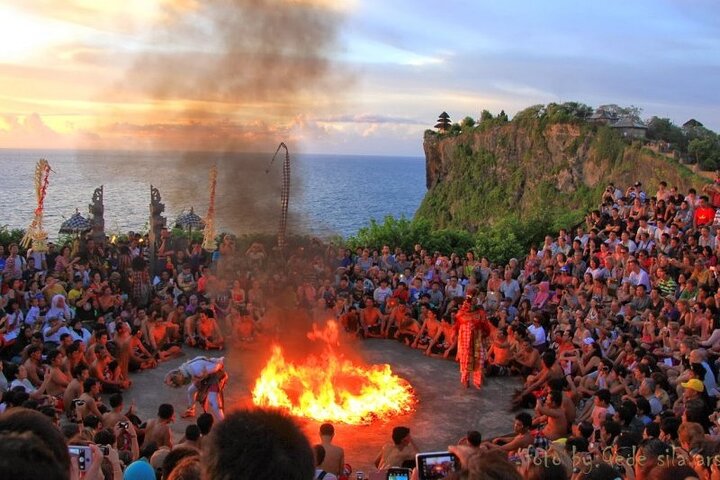


Enjoy a private 8-hour tour to visit Uluwatu Temple for watch kecak dance while seeing amazing sunset. You will also visit Nusa Dua beach and Padang Padang Beach.
For a full refund, cancel at least 24 hours before the scheduled departure time.
English


Your evening begins with a pickup from your accommodation for a trip to Uluwatu Temple. Perched on a cliff edge high above the sea, this site provides a clear view of the sunset over the Indian Ocean. After exploring the temple grounds, you will watch a Kecak Fire Dance performance. This traditional Balinese show features a large group of chanters and fire-based choreography to depict an episode from the Ramayana. The tour ends with a seafood dinner served on the beach at Jimbaran before you are driven back to your hotel.
For a full refund, cancel at least 24 hours before the scheduled departure time.
English


Join a small group to visit Uluwatu Temple, a historic site located in Pecatu village on Bali's southern coast. The temple is built directly onto a limestone cliff that drops 70 meters into the Indian Ocean, providing a clear vantage point for the horizon. The tour is timed for the evening so you can watch the sunset from the top of the cliffs. You will have time to explore the temple grounds and take in the coastal views as the light changes over the water.
For a full refund, cancel at least 24 hours before the scheduled departure time.
Arabic, Malay, English


Begin your journey along Bali’s southern coast with a stop at Padang-padang or Melasti Beach. These white-sand shores provide a relaxed start to the afternoon before you head to Uluwatu Temple, also known as Pura Luhur. Perched 70 meters above the Indian Ocean on a steep cliffside, this temple is one of the island's key spiritual pillars, traditionally built to protect Bali from seafaring evil spirits. As the sun sets over the ocean, you will move to the nearby amphitheater for the Kecak Fire Dance. This performance depicts scenes from the Ramayana through a rhythmic vocal chant performed by a large circle of men, featuring elaborate costumes and fire-lit choreography. If you select the dinner package, the evening concludes with a seafood meal served on the beach at Jimbaran Bay.
For a full refund, cancel at least 24 hours before the scheduled departure time.
English


This trip heads to the southern tip of Bali to visit Uluwatu Temple, a landmark situated on a 70-meter-high cliff overlooking the Indian Ocean. You will arrive in time to walk the temple grounds and watch the sun set over the water. As evening falls, you will attend a kecak dance performance at the temple's amphitheater. This traditional Balinese ritual features a large group of men chanting in rhythm to act out scenes from the Ramayana. To end the night, there is an option to visit Jimbaran Bay for a seafood dinner served on the beach.
For a full refund, cancel at least 24 hours before the scheduled departure time.
English