
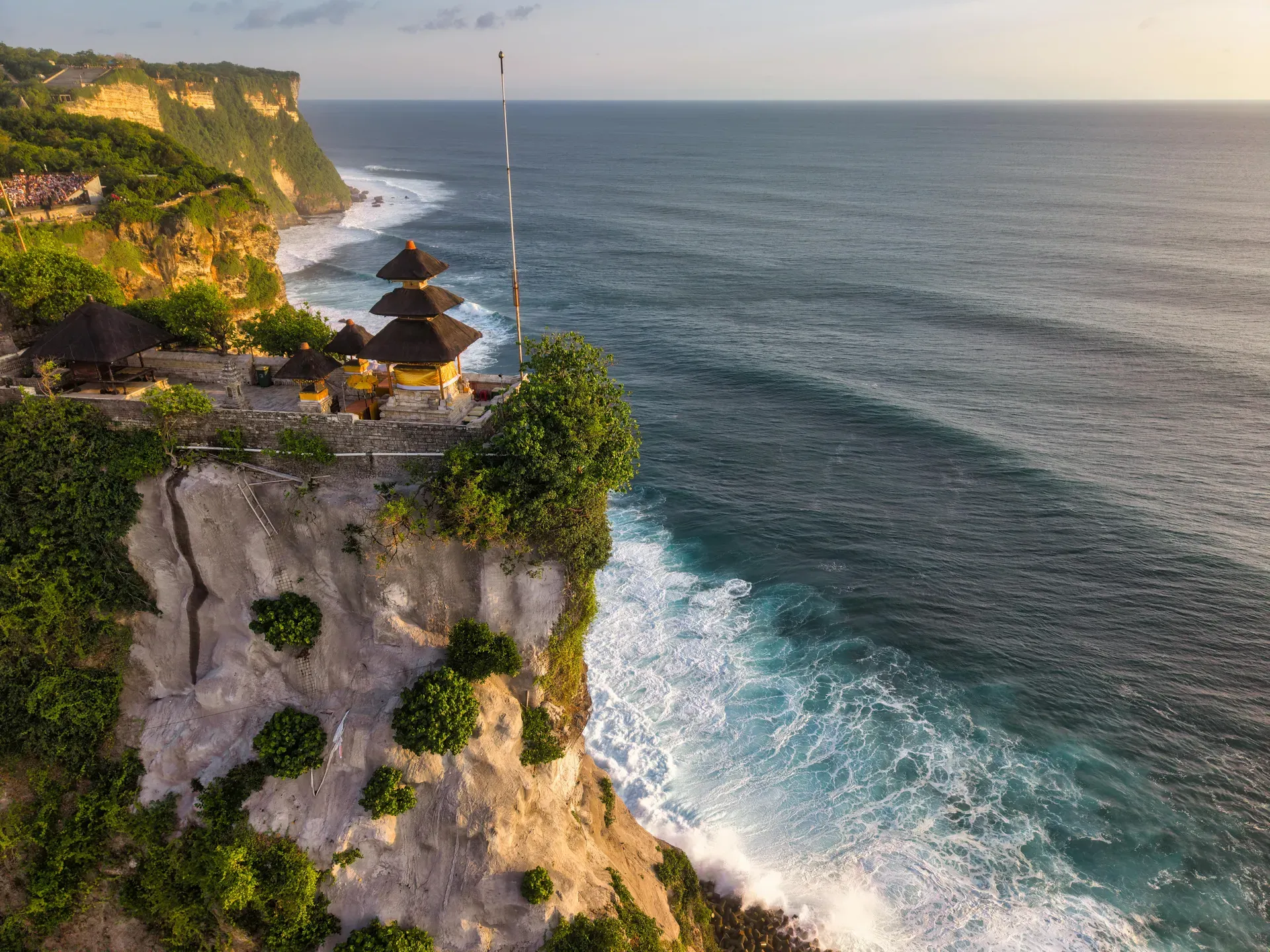
Uluwatu Temple balances on a 70-meter limestone cliff dropping directly into the Indian Ocean at the southwestern tip of Bali's Bukit Peninsula. The 11th-century Hindu complex protects the island from sea spirits while hosting 650 resident macaques and nightly fire dances.
Seventy meters of jagged limestone plunge straight into the Indian Ocean at the southwestern tip of Bali's Bukit Peninsula. Pura Luhur Uluwatu anchors this sheer drop. Waves smash against the rock face below, sending salt spray up toward the ancient split gates. The complex consists of multiple dark gray coral-rock shrines strung along a paved cliffside path. Visitors walk a narrow concrete walkway hugging the precipice, flanked by a dense forest that houses roughly 650 long-tailed macaques.
These monkeys dictate the flow of foot traffic. They sit on stone walls, study the crowds, and aggressively target loose items. Broken prescription glasses, snatched water bottles, and stolen smartphones frequently litter the ground near the entrance. The macaques engage in a learned bartering system, holding stolen goods hostage until temple staff offer them specific fruits or eggs in exchange. Tourists must secure all belongings inside zipped bags before passing the main gates.
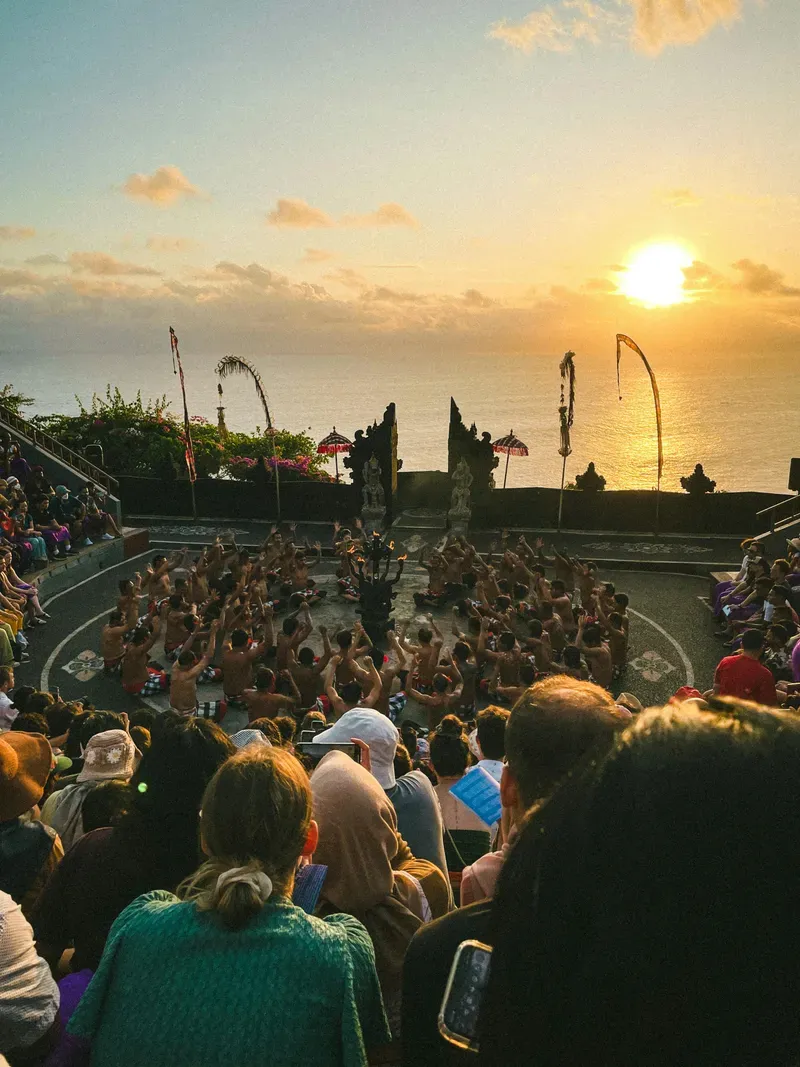
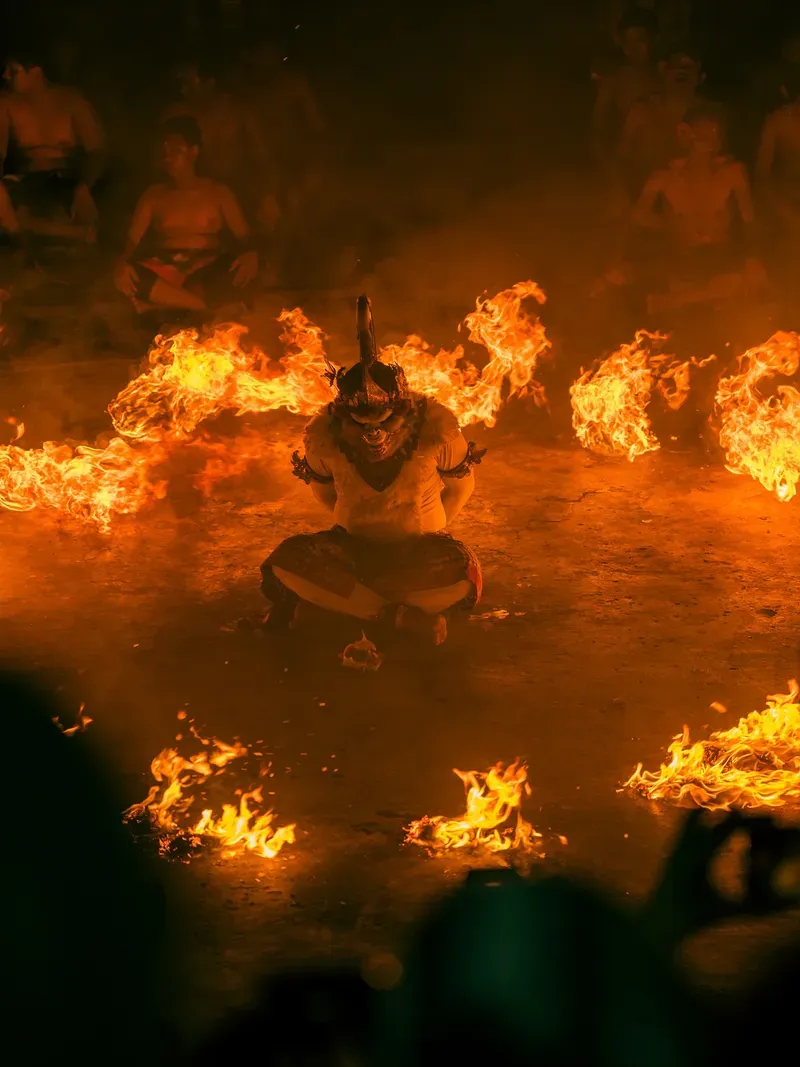
The site operates as a working spiritual center while absorbing heavy tourist volume. Crowds peak late in the afternoon as the heat begins to break. At 18:00, 1,200 people pack into an open-air amphitheater near the main shrine. Fifty to one hundred bare-chested men wearing checkered sarongs enter the circle. They chant "cak-cak-cak" in unison, throwing their hands in the air to simulate fire and battle. This human chorus provides the only soundtrack for the Ramayana epic performance as the sun drops behind the horizon. Logistics require strict timing. Traffic bottlenecks form immediately after the 60-minute show ends. Hundreds of cars and scooters clog the single two-lane road back to Pecatu village. This mass exodus often turns the 22-kilometer drive back to Kuta or Seminyak into a grueling two-hour crawl. Book tickets online by 16:30, secure a designated driver, and use the restroom before the show begins.
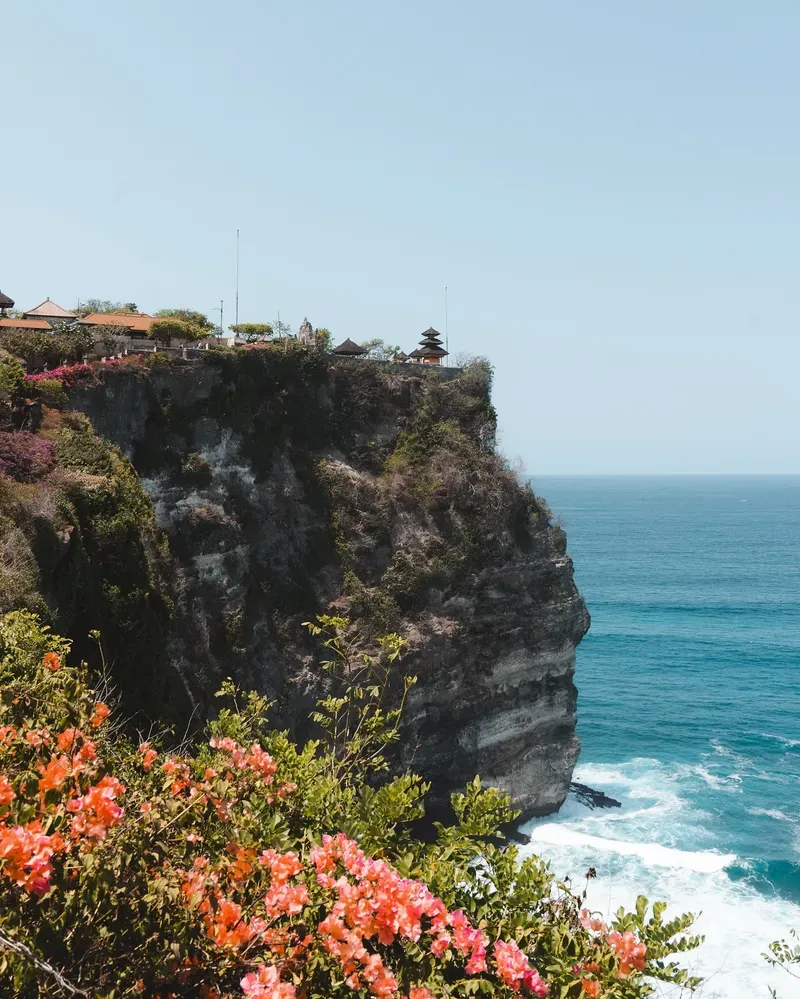
Archaeological fragments point to a small religious structure existing on the Bukit Peninsula limestone cliffs as early as the 10th century. The site remained a modest, localized shrine until the Javanese sage Empu Kuturan arrived in the 11th century. Kuturan traveled across Bali establishing a unified architectural and spiritual system. He expanded the Uluwatu grounds, laying the foundational architecture that aligned the temple with Balinese Hindu cosmology. Kuturan established the site as a spiritual boundary marker for the island's southern edge, integrating it into the Sad Kahyangan, the six core spiritual pillars of Bali. He introduced the tiered Meru tower design to the site, representing the mythological Mount Meru.
Five hundred years later, another influential Hindu priest named Dang Hyang Nirartha reached the peninsula during his pilgrimage across the island. He directed the construction of the padmasana shrines. These open, throne-like stone towers were built specifically to honor the supreme god Sang Hyang Widhi Wasa. Nirartha chose this specific 70-meter precipice for his final spiritual retreat. Local records state he attained moksha, or ultimate spiritual liberation, directly on this cliff. A lightning strike supposedly marked the exact moment his physical body vanished. The temple earned the title "Luhur," meaning something of divine origin or elevated status, following this specific event.
The complex remained largely isolated for centuries, accessible only to local villagers and pilgrims willing to navigate dense coastal scrub. In the 1930s, German painter Walter Spies collaborated with Balinese dancer Wayan Limbak to adapt a traditional trance ritual into a dramatic performance. They created the Kecak Fire Dance, extracting the chorus element from the Sanghyang exorcism dance and combining it with the Hindu Ramayana epic. While originally performed in villages like Bona, the dance eventually found a permanent home at Uluwatu. The temple committee constructed the dedicated amphitheater to capitalize on the dramatic sunset backdrop, transforming the site's economic model.
Today, the site manages immense physical strain. Over 1.2 million people visited in 2024. The sheer volume of foot traffic required the installation of concrete ramps, expanded parking lots, and reinforced cliff barriers. Heavy rains between November and March frequently wash out the dirt paths connecting the outer courtyards. During these months, officials must relocate the nightly dance performances to a smaller, covered pavilion nearby. Check the official Uluwatu Temple website on the morning of your visit during the wet season to confirm the performance location.
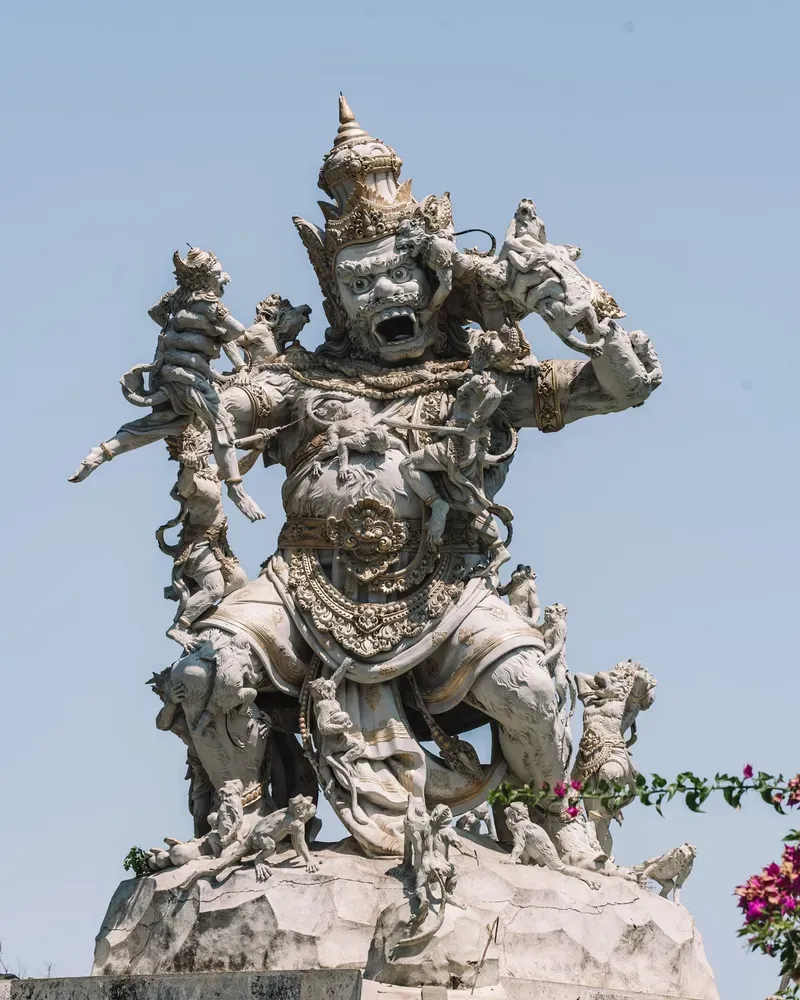
Dark gray coral stone forms the primary building material for the entire complex. Builders carved these porous blocks directly from the surrounding reef and limestone cliffs centuries ago. The main entrance features a traditional Candi Bentar, a split gateway that looks like a single mountain sliced perfectly down the middle and pulled apart. Intricate carvings of Kala, a demonic face with bulging eyes and sharp teeth, sit directly above the archways. These stone faces function as spiritual security, designed to frighten away malevolent forces attempting to enter the sacred space.
Inside the courtyards, three-tiered Meru towers rise above the stone walls. These pagoda-like structures feature roofs made from tightly bound black palm fiber known as ijuk. The inner sanctum sits on the highest point of the cliff, completely off-limits to tourists. A low stone wall separates this area from the public walkways. Only Hindu worshippers wearing full traditional dress, carrying woven bamboo offering baskets, may pass the final stone gates into the main prayer pavilion.
The geological foundation is equally severe. The 70-meter limestone cliff face drops at a near-90-degree angle into the surf. A paved, one-kilometer walkway hugs this edge, bordered by a low concrete wall. Afternoon heat bakes the exposed stone paths, offering zero shade for visitors walking between the northern and southern viewing points. The drop remains unfenced in several older sections of the outer perimeter. Keep a firm grip on children and stay at least two meters back from any unmarked ledge.
Uluwatu stands as a Pura Kahyangan Jagat, or directional temple. Balinese Hinduism dictates that nine specific temples form a protective ring around the island. Uluwatu guards the southwest corner against evil sea spirits, specifically entities associated with Dewa Baruna, the god of the ocean. The physical placement on the jagged precipice directly reflects this defensive spiritual role, acting as a literal and figurative fortress wall against the chaotic energy of the sea.
The resident macaques hold a specific religious status within this system. Locals view the 650 monkeys as the physical guardians of the temple grounds, descended from Hanuman's monkey army in the Ramayana epic. Temple priests leave daily offerings of fruit and rice for them, integrating the animals into the site's daily rituals. This sacred status means the monkeys face no retaliation when they steal phones or bite tourists. Handlers will only use distraction techniques, never force, to retrieve stolen items.
Strict purity laws govern access to the site. Women who are menstruating cannot enter the temple grounds. Balinese custom considers blood a ritually impure substance (sebel) that disrupts the spiritual balance of the holy site. Guards at the entrance strictly enforce this rule, relying on the honor system but occasionally questioning visitors. The site demands modest dress from everyone. You must wear a purple sarong and yellow sash—handed out free at the ticket counter—regardless of how hot the afternoon sun gets.
The macaques specifically target high-value items like smartphones and glasses, knowing they can trade them back to temple staff for fruit.
The 60-minute Kecak Fire Dance relies entirely on a human chorus of 50 to 100 men chanting, with zero musical instruments.
Local texts claim a lightning bolt struck the cliff the exact moment priest Dang Hyang Nirartha achieved spiritual liberation.
The waters directly beneath the temple cliffs form a famous and dangerous professional surf break.
The original gates and shrines were carved from hardened coral rock pulled from the surrounding ocean.
Tourists are permanently barred from the highest courtyard; only practicing Hindus may enter the main prayer area.
During the wet season, sudden downpours force the massive outdoor fire dance into a cramped, covered pavilion.
The main performance begins at 18:00 every day. During the peak dry season, organizers frequently add a second show at 19:00 to handle overflow crowds.
Yes. The 1,200 seats regularly sell out by 17:00. Book online or arrive at the physical ticket booth no later than 16:30.
They are highly skilled thieves rather than physically aggressive attackers. They snatch 5 to 10 smartphones and pairs of glasses daily from distracted tourists.
Shoulders and knees must be covered. Staff provide a free purple sarong and yellow sash at the entrance for anyone wearing shorts or tank tops.
No. The inner sanctum is strictly reserved for Hindu worshippers. Visitors can only walk the outer courtyards and the cliffside paths.
International adults pay 60,000 IDR, while children cost 40,000 IDR. The Kecak Fire Dance requires a separate ticket costing 150,000 IDR.
Plan for 1.5 to 3 hours. This allows time to walk the one-kilometer cliff path, secure your belongings from the monkeys, and watch the 60-minute dance.
Only partially. Concrete ramps connect the main yard and some clifftop paths, but steep stone stairs block access to higher viewpoints.
Hire a taxi, Grab, or Gojek for the 22-kilometer drive. The trip takes 45 minutes to get there, but up to two hours to return due to post-sunset traffic.
Drones are strictly prohibited without a specialized commercial permit. Security will confiscate unauthorized equipment at the main gate.
Browse verified tours with free cancellation and instant confirmation.
Find Tours